Key takeaways
- Training does not need to wait until a puppy is older.
- A puppy that feels safe is more likely to explore, learn, and engage with its owner.
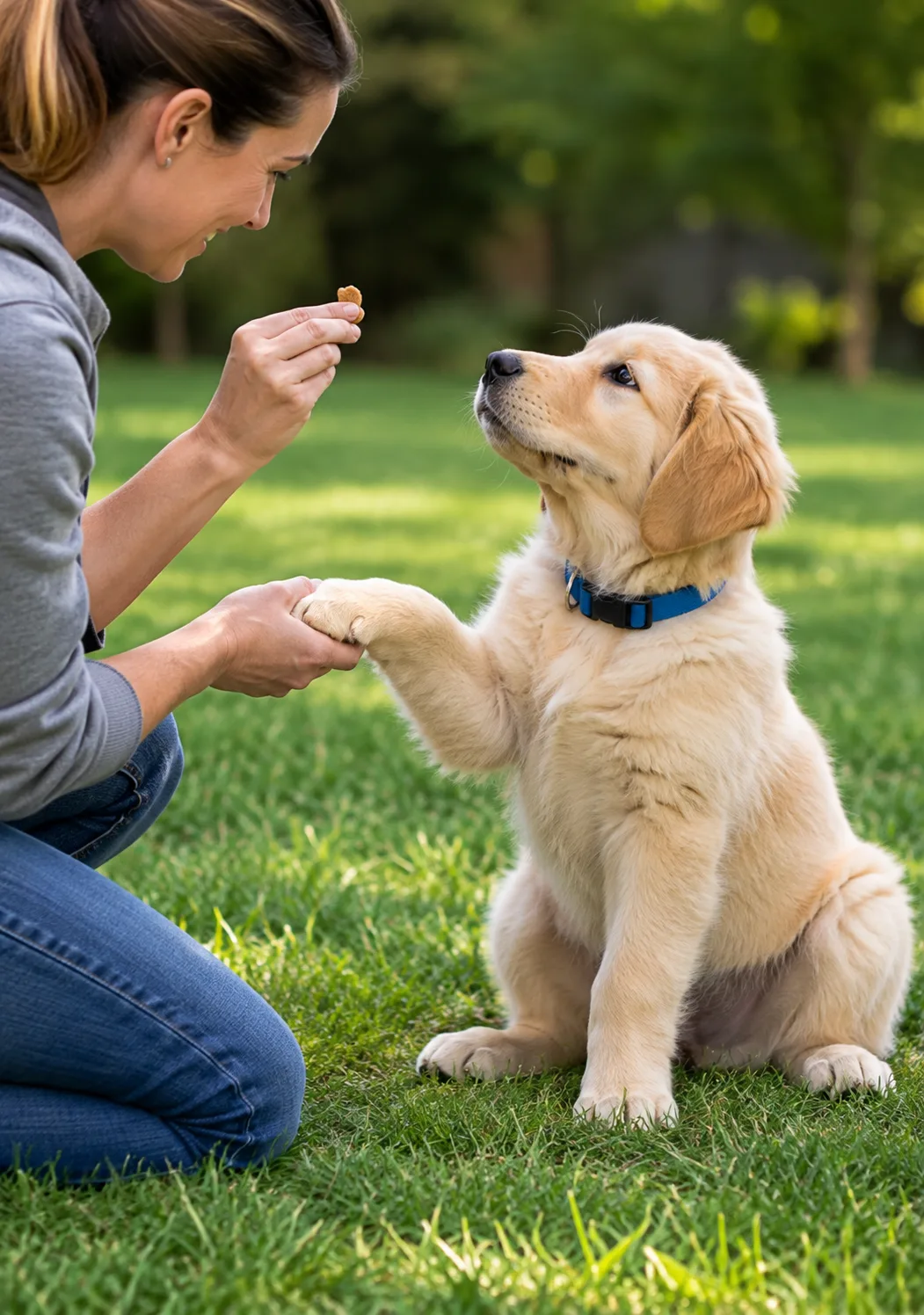
- Say the puppy's name once and reward when it looks toward you.
Training begins on arrival
Training does not need to wait until a puppy is older. The first lessons are gentle routines: where to rest, where to eliminate, what is safe to chew, and how to respond to a name. Keep expectations appropriate for a young animal that needs frequent sleep and cannot concentrate for long.
Rather than trying to teach everything in a weekend, choose two or three simple skills and practice them during ordinary daily activities. A few rewarding repetitions while preparing meals or opening a door can be more productive than a long formal session.
Start with trust, not obedience
A puppy that feels safe is more likely to explore, learn, and engage with its owner. Reward voluntary attention, relaxed behavior, and curiosity. Avoid shouting or physical corrections when a puppy makes mistakes; they may not understand the behavior you wanted instead. When an exercise becomes frustrating, reduce distractions, make it easier, or end on a success. Learning should feel predictable, not intimidating.
Name recognition and recall
Say the puppy's name once and reward when it looks toward you. Then practice calling the puppy from a short distance in a safe room. Reward generously when it arrives, even if it takes a moment. Never use recall only to end play or deliver an unpleasant experience. Gradually increase distance and distraction, but do not expect reliable off-leash recall in unsecured areas.
Housetraining is an early priority
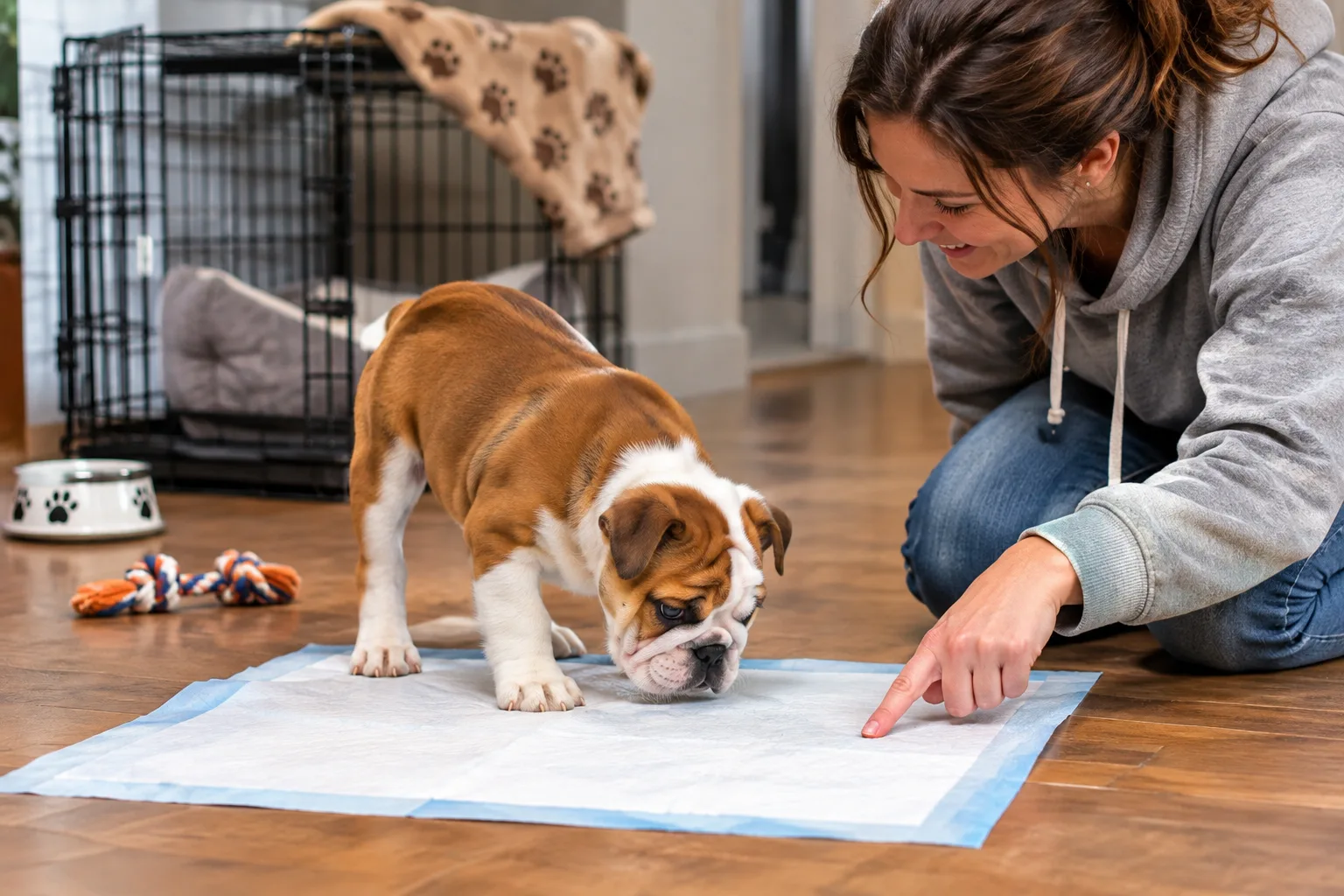
Take the puppy to a consistent bathroom area after waking, eating, drinking, and playing. Reward immediately after success. Supervise indoors and use gates or a pen when direct supervision is impossible. Accidents are information about the schedule, not evidence that the puppy is stubborn. Clean thoroughly and adjust the frequency of breaks. A young puppy may need nighttime trips.
Social experiences and vaccinations
Early learning includes meeting the world calmly. Let the puppy observe different people, surfaces, sounds, and environments at a comfortable distance. Ask your veterinarian about lower-risk outings while vaccinations are still being completed. Avoid crowded dog areas with unknown health status. The goal is positive exposure, not forcing a nervous puppy to accept every greeting.
Teach useful household habits
Reward sitting calmly while a leash is attached, settling on a mat, releasing a toy in exchange for another, and tolerating brief handling of paws and ears. Build these habits before a problem becomes established. Keep toys available for redirection and make rest part of the routine. Consistency between family members matters more than perfect timing in every interaction.
When classes can help
Look for a reward-based puppy class that explains vaccination requirements, sanitation, group size, and how instructors manage fearful dogs. A good class teaches owners to observe body language and adjust exercises. It should not rely on intimidation or force a puppy into overwhelming encounters. Private instruction may help with particular concerns, but many ordinary skills can be practiced at home.
Measure progress over weeks
A puppy may learn a skill in the kitchen and seem to forget it outside. That is normal: distractions change the task. Practice in several easy environments before expecting the same response everywhere. Keep brief notes on successes and difficulties. If fear, severe distress, or aggressive behavior persists, consult your veterinarian or a qualified behavior professional.
A sample first-week routine
On the first morning, take your puppy to its bathroom area, reward success, provide breakfast, and offer a brief supervised play period. Practice the puppy's name for a few repetitions, then allow a nap. Repeat a similar cycle after each rest period.
During the day, reward spontaneous calm behavior, introduce the resting area with food or toys, and offer short handling exercises. This is training even though it does not resemble a formal obedience class. A written routine helps everyone in the home use the same cues and expectations.
Common mistakes in the beginning
Trying to teach too many cues, keeping the puppy awake for long sessions, and correcting accidents after they happen can slow progress. So can expecting a puppy to perform in a busy park after practicing only in a quiet room. Begin with easy conditions and build gradually. If your puppy becomes mouthy, distracted, or restless, it may need a break rather than a harder lesson.
How to involve the whole family
Agree on where the puppy sleeps, whether it may go on furniture, which words mean come and release, and how to respond to jumping. Children can help by tossing treats for calm behavior under adult supervision, but should not be responsible for correcting or restraining a puppy. Keep training sessions friendly and predictable.
When to seek additional guidance
Repeated panic when separated, persistent fear, guarding of food or objects, or biting that causes injury deserve individualized assessment. A veterinarian can rule out pain or illness, while a qualified reward-based trainer can help design a safe plan. Early intervention is often easier than waiting until the puppy is much larger.
A realistic first seven days of puppy training
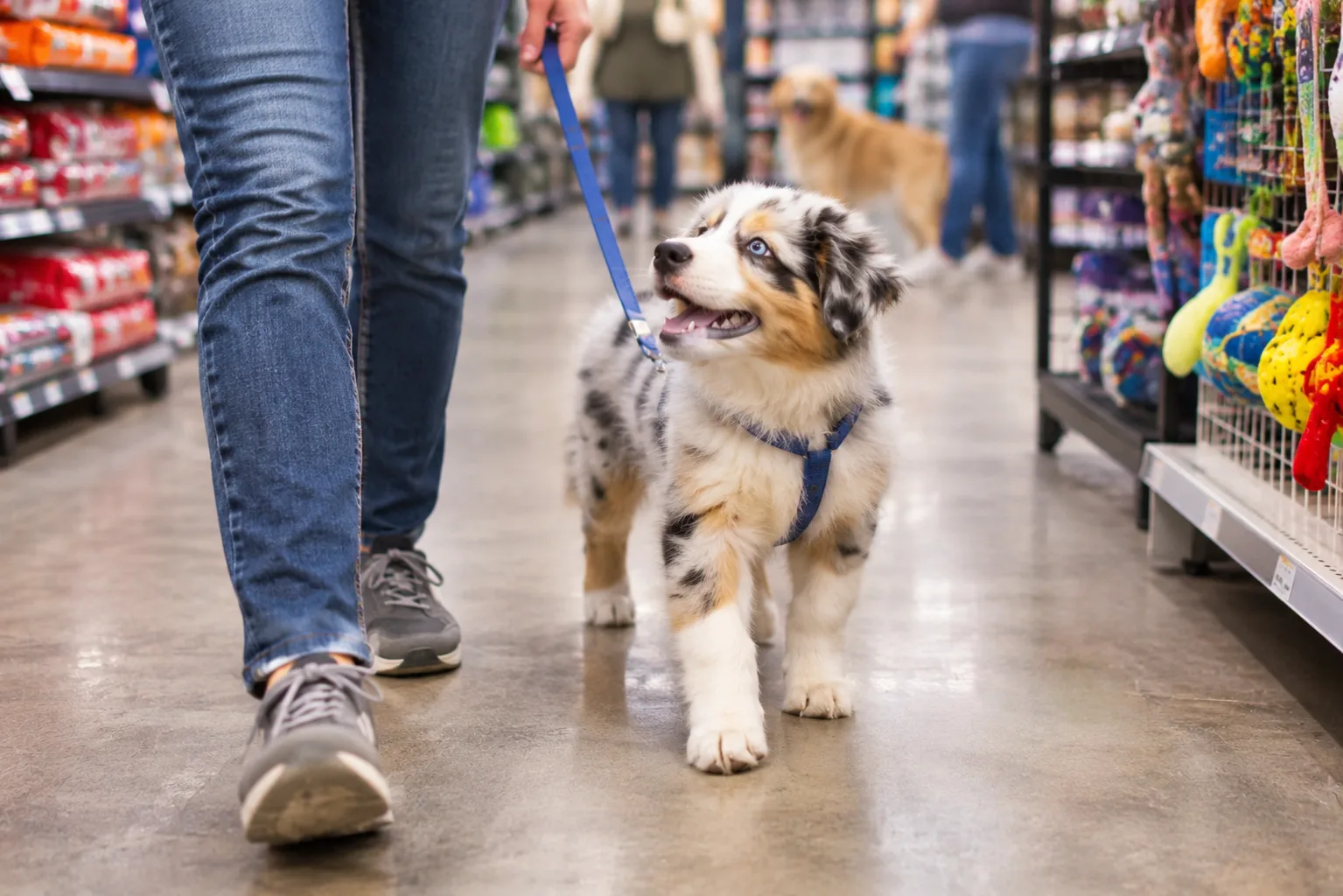
On the first day, reward the puppy for looking toward you when you say their name, settling beside you, and calmly following you a few steps. During days two and three, add very short recall games indoors and take the puppy to their toilet area after naps, meals and play. Later in the week, introduce gentle harness handling, a few seconds of sitting, and brief periods of comfortable rest in a designated safe space.
Keep practice sessions short and stop while the puppy is still engaged. A predictable daily routine and immediate rewards matter far more than drilling a long list of commands.
What to track instead of expecting perfection
Keep a simple log of bathroom trips, accidents, sleep, mealtimes, and which cues the puppy is beginning to recognize. If accidents become more frequent, adjust supervision and take the puppy outside sooner rather than punishing mistakes. Notice whether the puppy is tired, distracted or worried; these are signals to make the exercise easier.
Training progress is rarely a straight line. Puppies may perform a cue indoors and seem to forget it outdoors, where scents, people and noises are competing for their attention. Practice in gradually more distracting environments and reward each small success.
Training questions new owners often ask
Does a puppy need to know 'sit' before learning recall? No. Responding to their name and coming happily toward you can begin immediately.
Is it too early for short training sessions at eight weeks? Most puppies can learn simple reward-based routines as soon as they settle into a home, with age-appropriate expectations. Should you shout when a puppy bites or has an accident?
Avoid punishment that may cause fear; redirect to an appropriate activity and improve management. If a puppy is consistently frightened, guarded or difficult to handle, ask a qualified reward-based trainer or your veterinarian for help.
Helpful tools for positive puppy training
Choose comfortable, age-appropriate equipment and pair it with short, positive practice sessions.
As an Amazon Associate, Reserve a Pup earns from qualifying purchases. These links open Amazon searches; prices, availability and products are determined by Amazon.