Key takeaways
- Pick short, distinct words for behaviors you will use every day.
- Hold a small treat near the puppy's nose and move it slowly so the head follows and the rear naturally lowers.
- Begin in a quiet room at a short distance.
Choose clear cues
Pick short, distinct words for behaviors you will use every day. Say each cue once, then give the puppy time to respond. Repeating a word many times while the puppy is distracted can teach it that the first few repetitions do not matter. Pair verbal cues with simple hand movements when helpful, and make sure everyone in the household uses the same terms.
Teach sit by rewarding the position
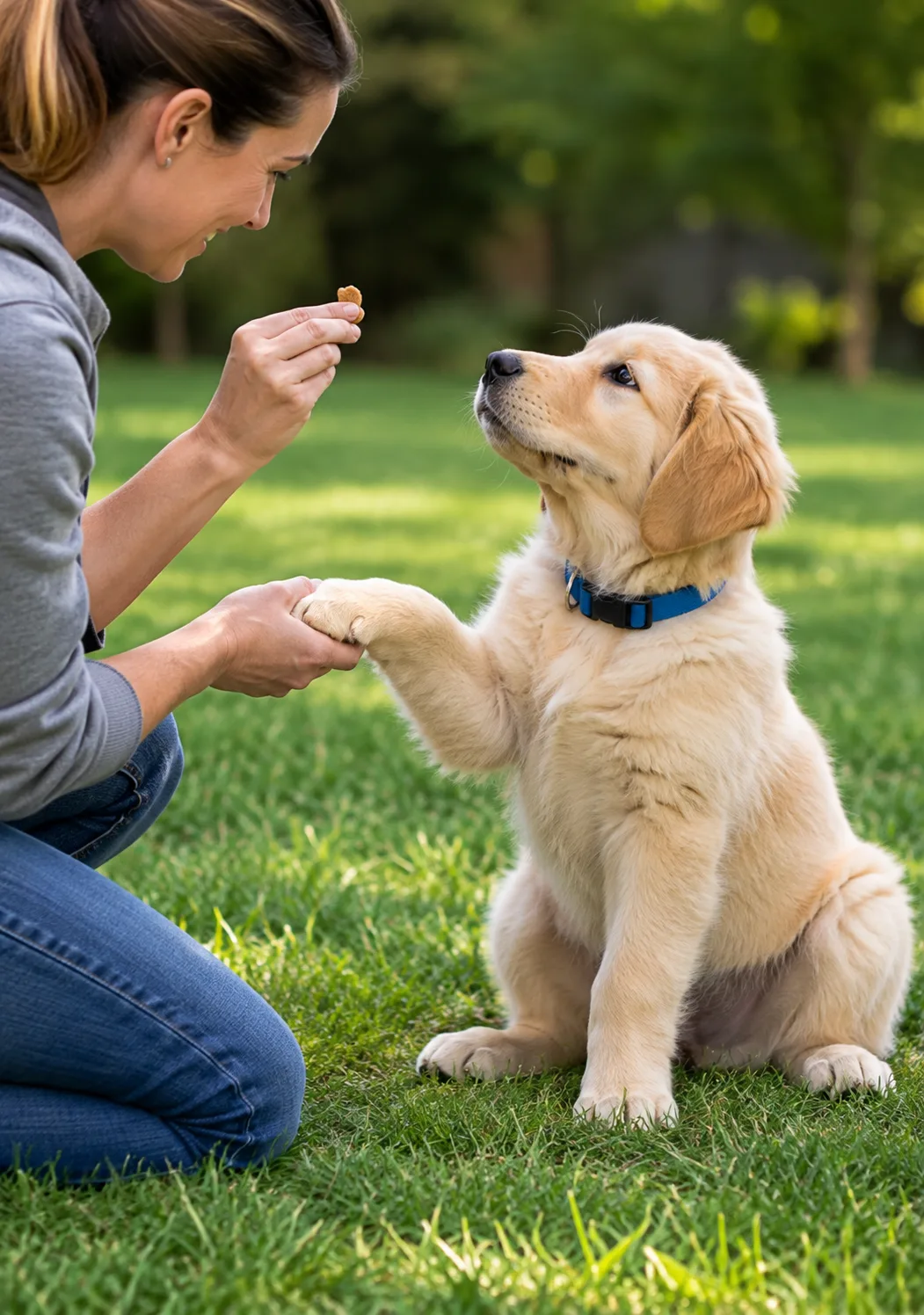
Hold a small treat near the puppy's nose and move it slowly so the head follows and the rear naturally lowers. Reward when the puppy sits, then gradually add the cue. Do not push the puppy's body into position. Some puppies find slippery floors uncomfortable, so practice on a nonslip surface. Sitting should be an invitation to earn a reward, not a demand that overrides fear or physical discomfort.
Build a dependable come cue
Begin in a quiet room at a short distance. Use a cheerful voice, move backward slightly, and reward the puppy when it reaches you. Practice before meals or play. As reliability improves, increase distance and introduce mild distractions. Outdoors, use a secure area or appropriate long line. Never punish a puppy for returning, even if it was slow.
Teach leave it safely
Start with a low-value object protected under your hand. Reward the puppy for disengaging and looking toward you. Gradually practice with objects in view while preventing access. This skill can help around dropped food or tempting household items, but it is not a substitute for keeping hazards out of reach. For emergencies involving toxic substances, prioritize safety and veterinary advice.
Introduce stay in tiny steps
Ask for a sit or down, pause for a second, and reward before the puppy moves. Increase duration before distance, and add distractions only after the easier version is reliable. Use a release word so the puppy knows when the exercise is finished. Do not leave a young puppy alone in an unsafe position while testing a stay.
Teach loose-leash walking
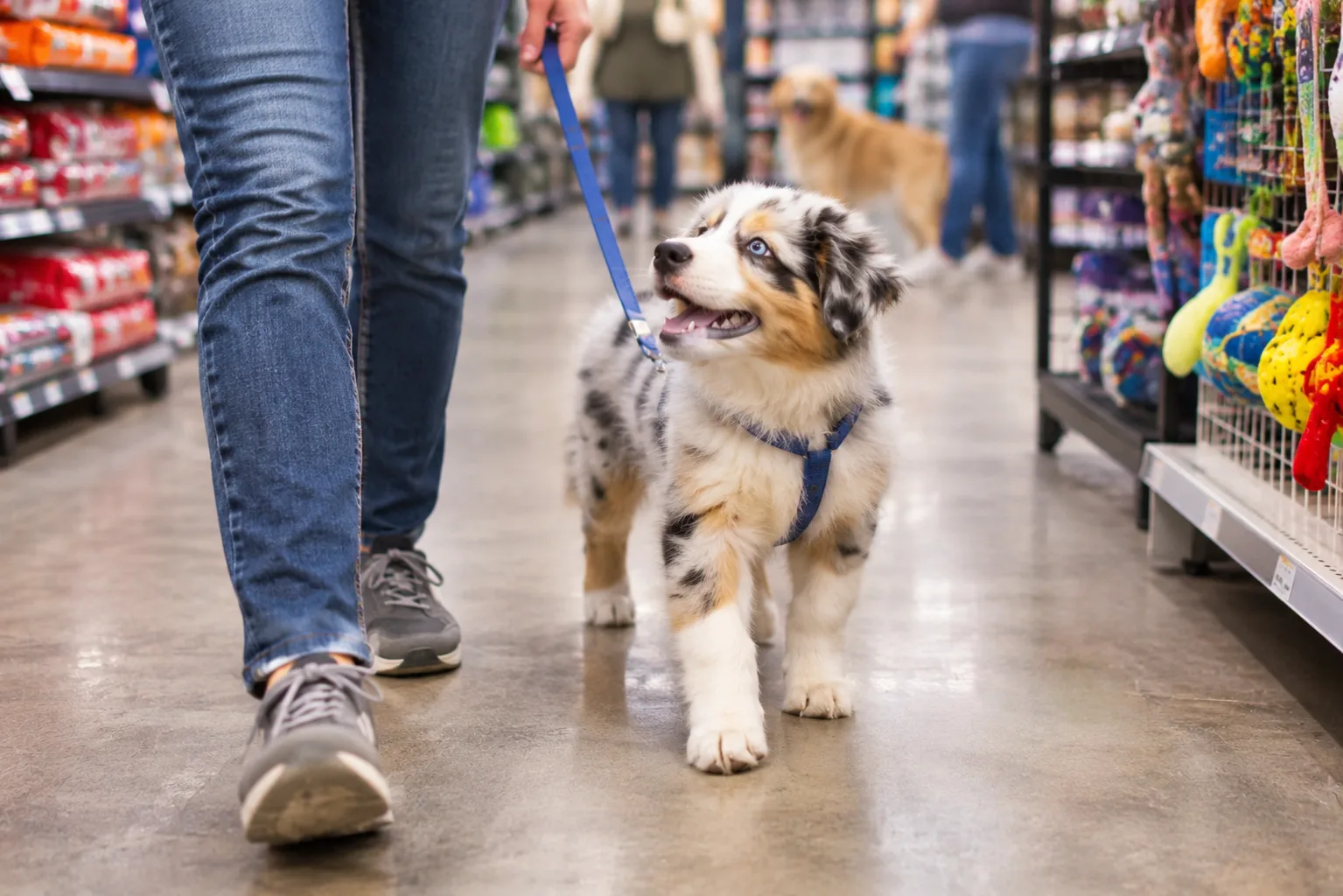
Reward the puppy for walking near you with a slack leash in a quiet area. Stop or change direction gently if it pulls, then reward renewed attention. Keep sessions short and allow appropriate sniffing. A comfortable harness may help, but equipment cannot replace teaching. Avoid jerking the leash or using painful corrections.
Practice handling and settling
Not every useful cue looks like obedience. Reward the puppy for resting on a mat, stepping onto a scale, accepting brief brushing, and offering a paw for inspection. These cooperative skills support grooming and veterinary care. Build them gradually, respecting signs of discomfort.
Troubleshoot without punishment
If the puppy fails to respond, consider whether the cue is understood, the reward is worthwhile, the environment is distracting, or the puppy is tired. Return to an easier version. Consistency and positive reinforcement build a stronger foundation than repeated corrections.
The importance of timing
A reward works best when it closely follows the behavior you want to encourage. For a sit, reward as the puppy's rear touches the floor, not after it has already jumped up. A consistent marker word such as yes can help identify the successful moment. Teach the marker by saying it and immediately giving a treat several times before using it in training.
Generalize cues gradually
A puppy that sits reliably in the kitchen may not understand the same cue beside a busy road. Practice in different rooms, then a quiet yard, and later slightly busier places. Change only one difficulty at a time: duration, distance, or distraction. If the puppy struggles, return to an easier setting and reward success.
Make rewards practical
Food is convenient for teaching new skills, but it is not the only reward. Some puppies value a brief game, access to a sniffing spot, or a chance to greet a familiar person. Use what the puppy enjoys and account for food rewards in its daily diet. Avoid withholding essential care to make the puppy more motivated.
Build a short daily plan
Practice name response before breakfast, a few sits before opening a door, recall during indoor play, and settling during family quiet time. End while the puppy is still interested. Several short practices woven into daily life often create better habits than one exhausting session.
A five-minute practice session you can repeat
Start in a quiet room with tiny, puppy-safe rewards. Spend one minute rewarding your puppy for turning toward you when you say their name. Next, lure a comfortable sit and mark the instant their bottom touches the ground.
Practice two or three cheerful recalls across a short distance, rewarding them for reaching you. Finish with a simple 'find it' game by placing a treat on the floor. End before the puppy loses interest.
Repeat in short bursts across the day. A few successful repetitions are more useful than a long, frustrating practice session.
How to build reliability without repeating cues
Say a cue once and give your puppy enough time to respond. If nothing happens, reduce the difficulty: move closer, lower the distraction level or return to a familiar exercise. Repeating 'come, come, come' teaches the puppy that the first word may not matter.
Use a consistent reward marker such as 'yes' or a clicker and deliver the reward immediately afterward. Change only one variable at a time. For example, first practice 'stay' for a moment, then add a little distance, then a mild distraction; do not increase all three at once.
What to do when a command stops working outdoors
A puppy who sits reliably in the kitchen may struggle in a park because the environment is much more distracting. Begin outdoors in a quiet area, use higher-value rewards and ask for a behavior the puppy already knows. Increase the challenge gradually.
Never call a puppy to you just to scold them or end every enjoyable activity; returning should predict something positive. Use a secure leash or safely fenced area until recall is dependable. If a puppy seems fearful or overwhelmed, allow distance from the trigger before attempting another training repetition.
Helpful tools for positive puppy training
Choose comfortable, age-appropriate equipment and pair it with short, positive practice sessions.
As an Amazon Associate, Reserve a Pup earns from qualifying purchases. These links open Amazon searches; prices, availability and products are determined by Amazon.