Key takeaways
- Puppies develop expectations about people, places, animals, and everyday events through early experience.
- Watch for loose movement, curiosity, and an ability to take treats or disengage.
- Introduce the puppy to calm adults and children with varied voices, clothing, hats, and movement patterns.
Why the early weeks matter
Puppies develop expectations about people, places, animals, and everyday events through early experience. This sensitive developmental period makes gentle, positive exposure valuable, but the precise timing varies by individual. Socialization does not mean taking a puppy everywhere or letting everyone touch it. The goal is to help the puppy notice new things and remain comfortable.
Follow the puppy's signals
Watch for loose movement, curiosity, and an ability to take treats or disengage. Freezing, hiding, a tucked tail, or frantic attempts to escape suggest the situation is too difficult. Increase distance and give the puppy a choice. Forcing an encounter may create a negative association instead of confidence.
People of different appearances
Introduce the puppy to calm adults and children with varied voices, clothing, hats, and movement patterns. Let the puppy approach voluntarily, and ask visitors not to crowd or grab it. Children need adult supervision and instruction on gentle handling. Short successful interactions are better than prolonged excitement.
Sounds and surfaces
Practice around ordinary household noises at manageable levels: vacuum cleaners, doorbells, traffic, and kitchen appliances. Pair exposure with play or treats when the puppy remains relaxed. Explore safe surfaces such as grass, mats, and smooth flooring without forcing movement. Increase intensity gradually.
Safe exposure before vaccines are complete
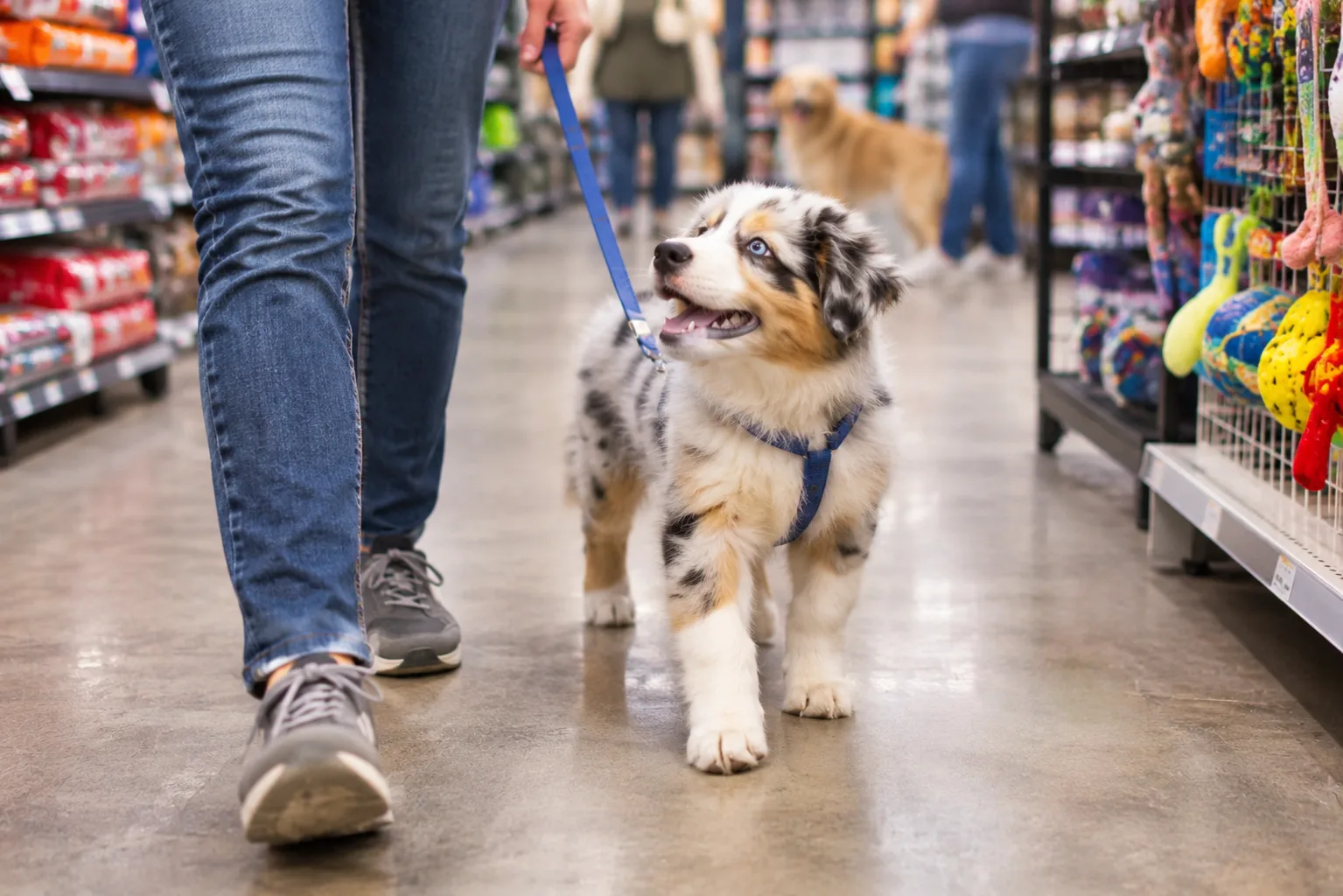
Discuss local disease risks and the puppy's vaccination history with a veterinarian. Controlled visits, being carried in public, and meetings with healthy vaccinated dogs in clean environments may provide experiences without the same risks as crowded dog parks. Avoid areas with heavy dog traffic or unknown sanitation when advised.
Meeting other dogs
Choose calm, appropriate dogs and supervise closely. Good interactions include breaks, relaxed body language, and the ability to move away. Do not assume that every adult dog enjoys puppies. Avoid uncontrolled group encounters where a frightened puppy cannot escape.
Car rides and grooming
Begin with brief, comfortable car experiences using safe restraint. Pair nail-trim equipment, brushing, ear inspection, and gentle mouth handling with rewards. Stop before the puppy becomes overwhelmed. These everyday skills are a major part of social learning.
What if the puppy is already fearful?
It is never helpful to force a puppy to confront what scares it. Reduce intensity, work at a safe distance, and reward voluntary engagement. Seek a veterinarian or qualified reward-based trainer if fear persists or escalates. Socialization is an ongoing process after sixteen weeks, not a deadline after which learning ends.
Make an exposure plan
List ordinary experiences your puppy is likely to encounter as an adult: bicycles, visitors, delivery drivers, grooming tools, cars, veterinary clinics, different flooring, and children at a distance. Introduce one or two manageable experiences at a time. A checklist is useful for planning, but do not turn it into a race to expose the puppy to as many things as possible.
Quality matters more than quantity
One relaxed observation of a passing bicycle may be more valuable than several frightening close encounters. Let the puppy retreat, sniff, or simply watch. Reward voluntary engagement and avoid pulling it toward something it fears. The goal is confidence, not forced tolerance.
Plan around health precautions
A veterinarian can help weigh the behavioral benefits of early exposure against infectious-disease risk in your community. A clean puppy class with appropriate entry requirements may be useful, while crowded areas frequented by unknown dogs may be inappropriate. Carrying the puppy to observe activity is another option.
Continue beyond the early period
Social learning does not stop at sixteen weeks. Adolescent dogs may become more cautious or distracted, and previously easy situations can temporarily become challenging. Continue positive experiences at a comfortable pace and seek professional help if new fear or reactivity develops.
Build a calm socialization checklist
Rather than counting strangers touched or dogs greeted, record positive exposures to everyday experiences: adults wearing hats, delivery carts, umbrellas, gentle traffic sounds, car rides, different flooring, grooming tools and calm visitors. Pair each experience with something the puppy enjoys and let them choose whether to approach. A puppy who watches a bicycle from a comfortable distance may be learning just as much as one who walks past it.
Aim for several brief, pleasant experiences across the week. Stop or increase distance if the puppy freezes, hides, tries to escape or stops accepting familiar treats.
Balance exposure with infection precautions
The early socialization period overlaps with the puppy vaccination series. Ask your veterinarian about disease risks in your area and safe opportunities before full vaccination is complete. Controlled home visits with healthy, appropriately vaccinated dogs, puppy classes that use careful screening and sanitation, and observing the world while being carried may be options depending on local risk and the individual puppy.
Avoid forcing contact with unknown dogs or high-traffic areas where infectious disease exposure is a concern. Good socialization is about building confidence and positive associations, not exposing a puppy to every possible situation regardless of safety.
If your puppy gets overwhelmed
Watch for tucked posture, persistent retreat, trembling, frantic pulling away or an inability to recover after a surprise. Do not drag the puppy closer or insist that strangers pet them. Create distance, return to an easier environment and offer a predictable activity they enjoy.
Keep notes about what happened and how far away the trigger was. For ongoing fear, consult your veterinarian and a qualified trainer experienced in humane behavior work. Social learning continues after sixteen weeks, so missing one early experience is not a reason to rush or overwhelm your dog later.
Helpful tools for positive puppy training
Choose comfortable, age-appropriate equipment and pair it with short, positive practice sessions.
As an Amazon Associate, Reserve a Pup earns from qualifying purchases. These links open Amazon searches; prices, availability and products are determined by Amazon.