Key takeaways
- Puppies explore with their mouths, and teething can increase chewing and nipping.
- Keep safe chew toys available in rooms where your puppy spends time.
- An overtired puppy may become increasingly mouthy even when they need sleep.
Understand why puppies mouth
Puppies explore with their mouths, and teething can increase chewing and nipping. Play, excitement, frustration, and fatigue can all contribute. Mouthing is common, but it still needs guidance so the puppy learns how to interact gently with people.
Notice when biting happens most often: during energetic play, when visitors arrive, or late in the day. Understanding the trigger helps you change the situation before the puppy becomes overwhelmed.
Redirect to appropriate toys
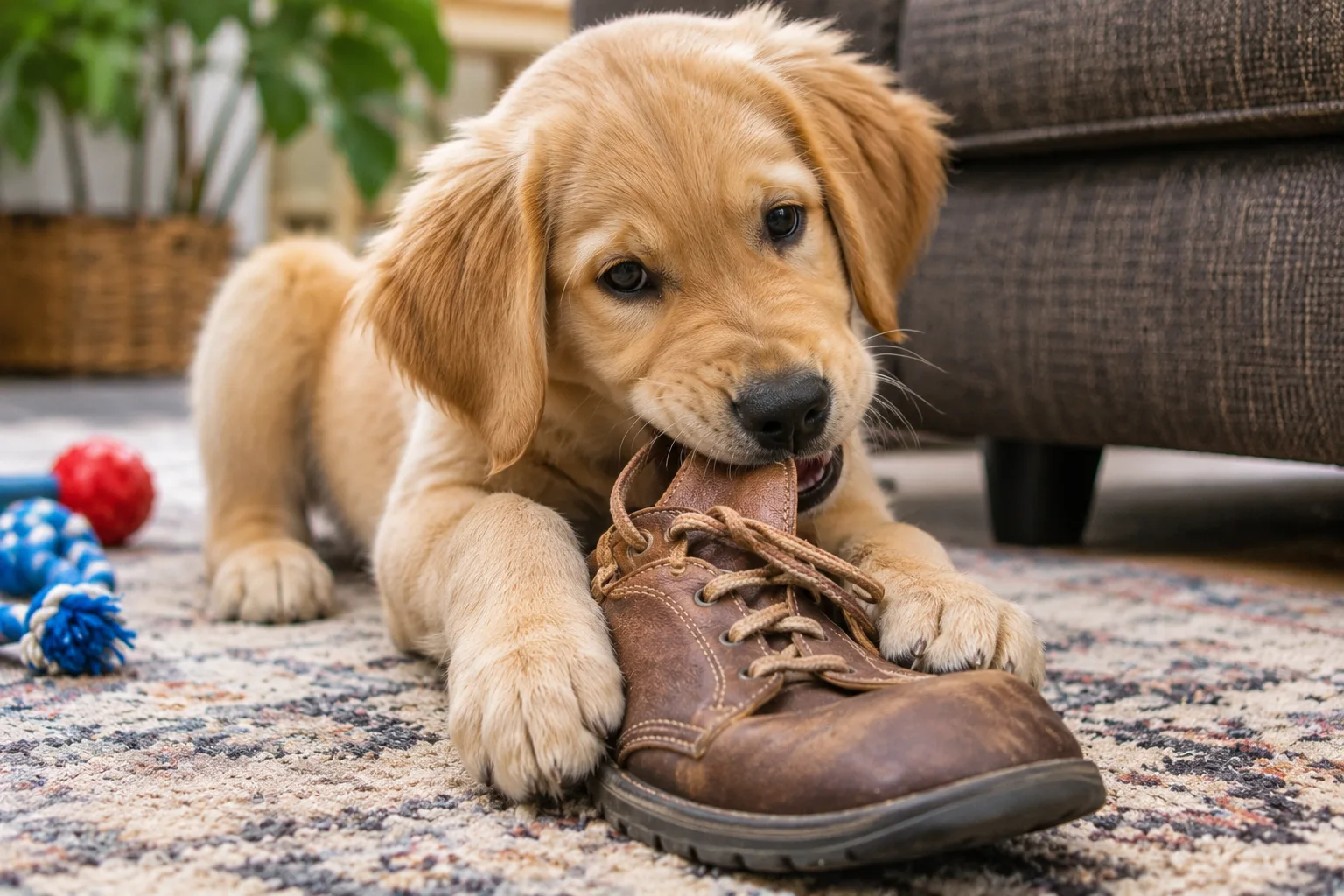
Keep safe chew toys available in rooms where your puppy spends time. If the puppy grabs your sleeve or hand, calmly redirect them to a toy and reward the choice to chew it. Avoid rough games that encourage grabbing skin or clothing.
If excitement escalates, pause the interaction briefly and give the puppy a chance to settle. Short, calm practice sessions are more productive than repeatedly provoking biting to correct it.
Use rest and management
An overtired puppy may become increasingly mouthy even when they need sleep. Provide a quiet resting area and predictable nap opportunities. Puppy-proof the environment so tempting items are out of reach.
Supervise interactions with children and teach everyone to avoid running, shrieking, or waving hands around an excited puppy. Do not use physical punishment, intimidation, or painful corrections, which can increase fear and damage trust.
Get help when needed
If biting is unusually intense, causes repeated injuries, or occurs alongside stiff body language, guarding, or fear, consult your veterinarian or a qualified reward-based behavior professional. Pain or illness can sometimes contribute to sudden behavior changes. Early individualized help is preferable to allowing a difficult pattern to become established. Most puppies improve with time, appropriate outlets, consistent boundaries, and gentle teaching.
Why puppies use their mouths
Exploration, teething, excitement, and play can all contribute to mouthing. This matters because decisions about how to stop a puppy from biting are easier when families and breeders understand the practical details before problems arise. Ask what evidence supports the information you have been given, and distinguish a documented fact from a prediction or sales claim.
If the answer is unclear, request a specific example or written explanation rather than relying on an assumption. Think about how this point affects the individual puppy, the people caring for it, and the plans for the coming weeks. Keep notes on any dates, costs, responsibilities, or next steps that need to be confirmed.
Good preparation is not about finding a perfect situation; it is about identifying questions early, making informed choices, and putting the puppy's welfare ahead of convenience.
Recognize overtired behavior
A puppy that becomes increasingly frantic or mouthy may need a quiet rest period. This matters because decisions about how to stop a puppy from biting are easier when families and breeders understand the practical details before problems arise. Ask what evidence supports the information you have been given, and distinguish a documented fact from a prediction or sales claim.
If the answer is unclear, request a specific example or written explanation rather than relying on an assumption. Think about how this point affects the individual puppy, the people caring for it, and the plans for the coming weeks. Keep notes on any dates, costs, responsibilities, or next steps that need to be confirmed.
Good preparation is not about finding a perfect situation; it is about identifying questions early, making informed choices, and putting the puppy's welfare ahead of convenience.
Keep suitable chew toys nearby
Offer safe textures and redirect biting toward toys rather than hands or clothing. This matters because decisions about how to stop a puppy from biting are easier when families and breeders understand the practical details before problems arise. Ask what evidence supports the information you have been given, and distinguish a documented fact from a prediction or sales claim.
If the answer is unclear, request a specific example or written explanation rather than relying on an assumption. Think about how this point affects the individual puppy, the people caring for it, and the plans for the coming weeks. Keep notes on any dates, costs, responsibilities, or next steps that need to be confirmed.
Good preparation is not about finding a perfect situation; it is about identifying questions early, making informed choices, and putting the puppy's welfare ahead of convenience.
Teach calm play
Short games with pauses help prevent excitement from escalating into repeated nipping. This matters because decisions about how to stop a puppy from biting are easier when families and breeders understand the practical details before problems arise. Ask what evidence supports the information you have been given, and distinguish a documented fact from a prediction or sales claim.
If the answer is unclear, request a specific example or written explanation rather than relying on an assumption. Think about how this point affects the individual puppy, the people caring for it, and the plans for the coming weeks. Keep notes on any dates, costs, responsibilities, or next steps that need to be confirmed.
Good preparation is not about finding a perfect situation; it is about identifying questions early, making informed choices, and putting the puppy's welfare ahead of convenience.
Respond consistently
Everyone in the household should use similar gentle responses so the puppy receives a clear message. This matters because decisions about how to stop a puppy from biting are easier when families and breeders understand the practical details before problems arise. Ask what evidence supports the information you have been given, and distinguish a documented fact from a prediction or sales claim.
If the answer is unclear, request a specific example or written explanation rather than relying on an assumption. Think about how this point affects the individual puppy, the people caring for it, and the plans for the coming weeks. Keep notes on any dates, costs, responsibilities, or next steps that need to be confirmed.
Good preparation is not about finding a perfect situation; it is about identifying questions early, making informed choices, and putting the puppy's welfare ahead of convenience.
Supervise children closely
Children should not be expected to manage a mouthy puppy without adult help. This matters because decisions about how to stop a puppy from biting are easier when families and breeders understand the practical details before problems arise. Ask what evidence supports the information you have been given, and distinguish a documented fact from a prediction or sales claim.
If the answer is unclear, request a specific example or written explanation rather than relying on an assumption. Think about how this point affects the individual puppy, the people caring for it, and the plans for the coming weeks. Keep notes on any dates, costs, responsibilities, or next steps that need to be confirmed.
Good preparation is not about finding a perfect situation; it is about identifying questions early, making informed choices, and putting the puppy's welfare ahead of convenience.
Avoid physical punishment
Hitting, intimidation, or painful corrections can create fear and worsen behavioral problems. This matters because decisions about how to stop a puppy from biting are easier when families and breeders understand the practical details before problems arise. Ask what evidence supports the information you have been given, and distinguish a documented fact from a prediction or sales claim.
If the answer is unclear, request a specific example or written explanation rather than relying on an assumption. Think about how this point affects the individual puppy, the people caring for it, and the plans for the coming weeks. Keep notes on any dates, costs, responsibilities, or next steps that need to be confirmed.
Good preparation is not about finding a perfect situation; it is about identifying questions early, making informed choices, and putting the puppy's welfare ahead of convenience.
Manage the environment
Gates, pens, and appropriate toys reduce opportunities to rehearse unwanted biting. This matters because decisions about how to stop a puppy from biting are easier when families and breeders understand the practical details before problems arise. Ask what evidence supports the information you have been given, and distinguish a documented fact from a prediction or sales claim.
If the answer is unclear, request a specific example or written explanation rather than relying on an assumption. Think about how this point affects the individual puppy, the people caring for it, and the plans for the coming weeks. Keep notes on any dates, costs, responsibilities, or next steps that need to be confirmed.
Good preparation is not about finding a perfect situation; it is about identifying questions early, making informed choices, and putting the puppy's welfare ahead of convenience.
Reward gentle interaction
Notice calm greetings, relaxed handling, and appropriate toy choices. This matters because decisions about how to stop a puppy from biting are easier when families and breeders understand the practical details before problems arise. Ask what evidence supports the information you have been given, and distinguish a documented fact from a prediction or sales claim.
If the answer is unclear, request a specific example or written explanation rather than relying on an assumption. Think about how this point affects the individual puppy, the people caring for it, and the plans for the coming weeks. Keep notes on any dates, costs, responsibilities, or next steps that need to be confirmed.
Good preparation is not about finding a perfect situation; it is about identifying questions early, making informed choices, and putting the puppy's welfare ahead of convenience.
Understand teething needs
Chewing may increase during tooth development, and suitable outlets can help. This matters because decisions about how to stop a puppy from biting are easier when families and breeders understand the practical details before problems arise. Ask what evidence supports the information you have been given, and distinguish a documented fact from a prediction or sales claim.
If the answer is unclear, request a specific example or written explanation rather than relying on an assumption. Think about how this point affects the individual puppy, the people caring for it, and the plans for the coming weeks. Keep notes on any dates, costs, responsibilities, or next steps that need to be confirmed.
Good preparation is not about finding a perfect situation; it is about identifying questions early, making informed choices, and putting the puppy's welfare ahead of convenience.
Watch for concerning signals
Stiff posture, guarding, fear, or sudden changes may indicate a problem beyond ordinary play. This matters because decisions about how to stop a puppy from biting are easier when families and breeders understand the practical details before problems arise. Ask what evidence supports the information you have been given, and distinguish a documented fact from a prediction or sales claim.
If the answer is unclear, request a specific example or written explanation rather than relying on an assumption. Think about how this point affects the individual puppy, the people caring for it, and the plans for the coming weeks. Keep notes on any dates, costs, responsibilities, or next steps that need to be confirmed.
Good preparation is not about finding a perfect situation; it is about identifying questions early, making informed choices, and putting the puppy's welfare ahead of convenience.
Seek professional help early
A veterinarian or qualified reward-based trainer can assess persistent or injurious biting. This matters because decisions about how to stop a puppy from biting are easier when families and breeders understand the practical details before problems arise. Ask what evidence supports the information you have been given, and distinguish a documented fact from a prediction or sales claim.
If the answer is unclear, request a specific example or written explanation rather than relying on an assumption. Think about how this point affects the individual puppy, the people caring for it, and the plans for the coming weeks. Keep notes on any dates, costs, responsibilities, or next steps that need to be confirmed.
Good preparation is not about finding a perfect situation; it is about identifying questions early, making informed choices, and putting the puppy's welfare ahead of convenience.
Helpful tools for positive puppy training
Choose comfortable, age-appropriate equipment and pair it with short, positive practice sessions.
As an Amazon Associate, Reserve a Pup earns from qualifying purchases. These links open Amazon searches; prices, availability and products are determined by Amazon.