Key takeaways
- Rewards help with training, but they contribute calories and should not displace a nutritionally complete puppy food.
- Tiny pieces of suitable commercial puppy treats or some of the regular kibble can work well.
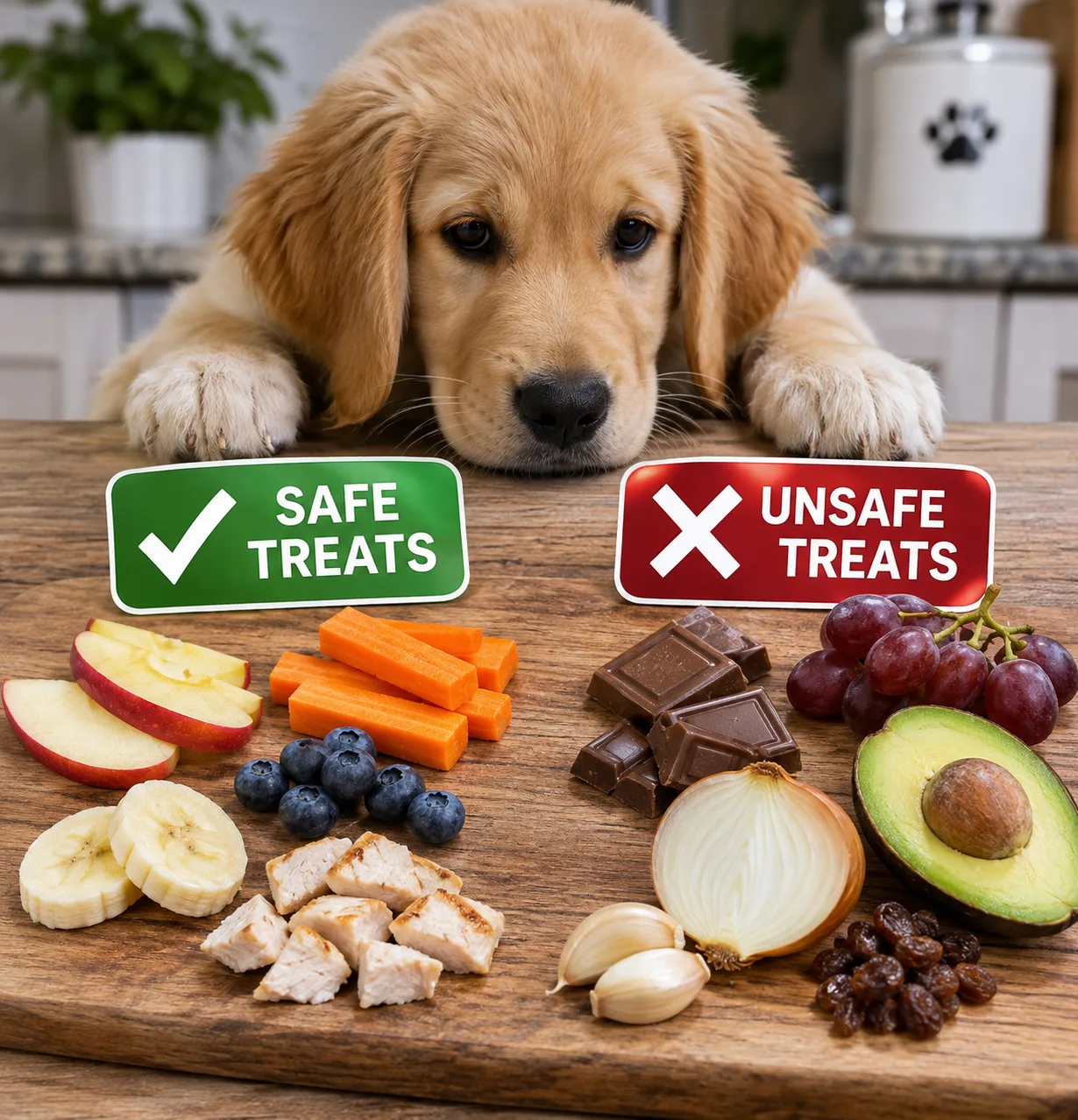
- Chocolate, grapes and raisins, onions and garlic, xylitol-containing products, alcohol, and macadamia nuts can be dangerous to dogs.
Health information: This guide is educational and is not a diagnosis or a substitute for individual veterinary advice. Contact your veterinarian about concerns with your puppy or dog.
Treats are part of the diet
Rewards help with training, but they contribute calories and should not displace a nutritionally complete puppy food. Choose small pieces that can be swallowed comfortably and adjust meal portions if needed.
Good training rewards
Tiny pieces of suitable commercial puppy treats or some of the regular kibble can work well. Soft rewards may be easier during rapid training. Choose size and texture based on the puppy's chewing ability and supervise eating.
Foods to avoid entirely
Chocolate, grapes and raisins, onions and garlic, xylitol-containing products, alcohol, and macadamia nuts can be dangerous to dogs. Keep them out of reach and seek veterinary or animal poison-control guidance promptly after a suspected exposure.
Beware of bones and choking hazards
Cooked bones can splinter, and very hard chews can damage teeth. Small objects and oversized chunks may create choking or obstruction risks. Select appropriate products and supervise chewing.
Human food is not automatically safe
High-fat scraps may cause gastrointestinal upset and can contribute to pancreatitis in susceptible dogs. Salty, heavily seasoned, or sweetened foods are poor routine choices. Ask your veterinarian before offering unfamiliar ingredients.
Check treat labels
Look at ingredients, calorie content, recommended age or size, and storage directions. Claims such as organic or natural do not establish that a treat is nutritionally appropriate or safe for every puppy.
Use rewards strategically
Reward immediately after the desired behavior and keep pieces tiny. Toys, praise, sniffing opportunities, and play can also reinforce learning, reducing the need for extra food.
Respond to suspected poisoning
Do not wait for symptoms or induce vomiting without professional instruction. Contact your veterinarian or an animal poison-control service with the ingredient, amount, and approximate time of exposure.
Treat size and texture matter
Choose rewards small enough for the puppy to chew and swallow safely. Very hard chews may damage developing teeth, while large chunks can be choking hazards. Supervise all chewing and remove broken pieces.
Check for hidden xylitol
Xylitol may appear in sugar-free gum, candies, baked goods, and some nut butters. It can cause dangerous effects in dogs. Check ingredient labels before sharing any human food and store these products securely.
Training without overfeeding
Break treats into tiny pieces, use part of the normal food ration, and mix in praise, play, or access to favorite activities. A reward only needs to be valuable enough for the task; it does not have to be large.
If your puppy eats something dangerous
Identify the substance and approximate amount, then contact your veterinarian or an animal poison-control service immediately. Keep packaging available. Do not induce vomiting unless instructed by a professional.
Build a puppy-safe training reward kit
Choose small, soft treats that your puppy can chew easily, or reserve a portion of their regular kibble for training. Break larger treats into tiny pieces so you can reward a behavior many times without feeding a large snack. Check ingredient labels and watch for stomach upset when introducing anything new.
Treats should be counted as part of the overall daily food allowance; a common veterinary nutrition guideline is to keep non-complete treats and extras to a small proportion of calories, often around ten percent. Ask your veterinarian how to adjust that for a very small puppy or a medically restricted diet.
A quick kitchen safety checklist
Keep chocolate, grapes, raisins, onions, garlic, products containing xylitol (sometimes labeled birch sugar), alcohol and macadamia nuts away from dogs. Watch for hidden ingredients in peanut butter, chewing gum, baked goods and sugar-free snacks. Cooked bones can splinter, and hard chews or pieces of food that are too large or tough can injure teeth or create choking hazards.
Human foods that are not toxic may still be too fatty, salty or rich for a puppy's digestive system. When in doubt, choose an age-appropriate dog treat instead of sharing food from the table.
If a puppy grabs something unsafe
Remove access to the remaining material and identify what was eaten, approximately how much and when. Keep the package or a photograph of its ingredients. Call your veterinarian or an animal poison-control service promptly for guidance; do not wait for symptoms if a known toxin may have been swallowed.
Do not induce vomiting or give home remedies unless a veterinary professional instructs you to do so. Signs such as repeated vomiting, weakness, tremors, collapse or trouble breathing require urgent veterinary attention. Prevention also means storing food, medications and chewing gum out of a puppy's reach.
Trusted organizations to consult
Explore these independent educational resources. Linking to them does not mean this article has been reviewed or endorsed by their organizations.
- Pet nutrition and weight management guidance ↗American Animal Hospital Association
- Nutrition for puppies and large-breed dogs ↗American Animal Hospital Association
Feeding and meal-preparation essentials
Simple tools can make meals more consistent while you follow your veterinarian's nutrition advice.
As an Amazon Associate, Reserve a Pup earns from qualifying purchases. These links open Amazon searches; prices, availability and products are determined by Amazon.


