
Key takeaways
- Choose a complete diet appropriate for growth and the puppy's expected adult size.
- Monitor body condition instead of trying to accelerate growth.
- Discuss diets and supplements with your veterinarian when special needs arise.
Health information: This guide is educational and is not a diagnosis or a substitute for individual veterinary advice. Contact your veterinarian about concerns with your puppy or dog.
Choose a complete growth diet
Look for a food labeled complete and balanced for growth under the applicable nutritional standard. Puppies need nutrients in appropriate proportions for developing bones, muscles, and organs. A diet marketed as natural, premium, or grain-free is not automatically better.
Large-breed puppies have special needs
Rapid growth and excessive calorie or mineral intake can contribute to orthopedic problems in susceptible dogs. For puppies expected to become large adults, choose food specifically appropriate for growth of large-size dogs and ask your veterinarian about body condition and feeding amounts.
Evaluate manufacturers and labels
Ask whether the company uses qualified nutrition expertise, feeding trials or appropriate formulation, and quality-control practices. Ingredient lists alone cannot show overall nutritional adequacy. Be cautious of dramatic marketing claims unsupported by evidence.
Wet, dry, and mixed feeding
Commercial wet and dry puppy foods can both be suitable when nutritionally complete for growth. Consider storage, dental care, convenience, and your puppy's preferences. If combining foods, account for the total calories rather than simply adding full servings of each.
Transition foods gradually
A sudden diet change can upset digestion. If switching, gradually mix increasing amounts of the new food over several days, unless a veterinarian recommends a different plan. Contact your veterinarian if diarrhea, vomiting, or poor appetite persists.
Avoid unbalanced homemade diets
Homemade recipes and raw diets can pose nutritional or infectious risks, especially during growth. If you want a home-prepared diet, consult a board-certified veterinary nutritionist for an individualized complete formulation.
Monitor body condition
Feeding guides are starting points, not exact prescriptions. Watch growth, body condition, stool quality, and energy. Your veterinarian can help adjust portions as the puppy changes rapidly.
Treats should stay limited
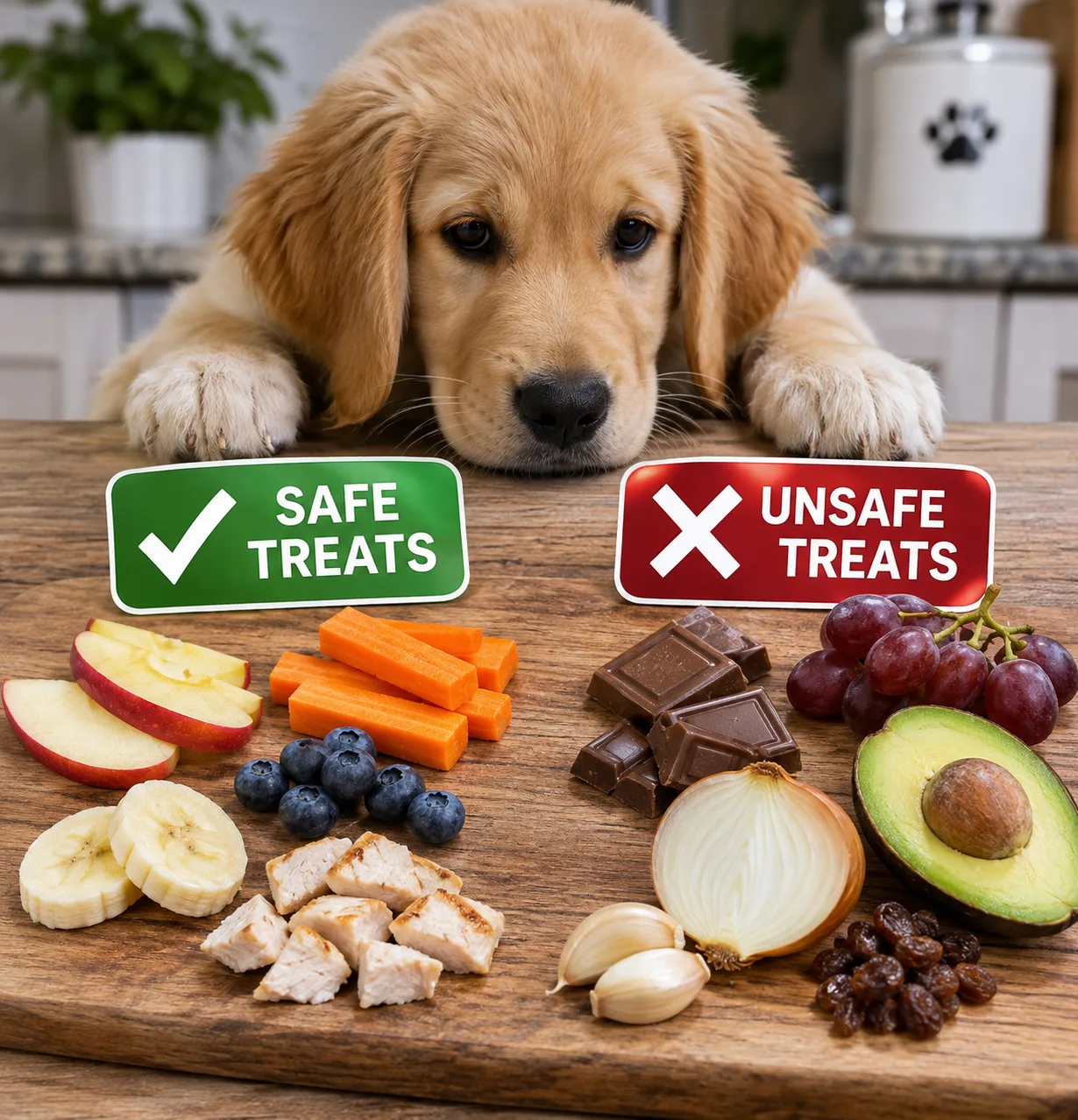
Training rewards count toward daily calories. Use tiny portions and consider reserving some of the puppy's regular food for practice. Keep fresh water available and avoid toxic human foods.
Read the nutritional adequacy statement
Look for wording showing that the food is formulated or tested to meet recognized nutritional standards for growth. For a large-breed puppy, confirm suitability for growth of large-size dogs when applicable. A food labeled for adult maintenance alone may not provide the right nutrient balance for a growing puppy.
How to judge feeding claims
Marketing terms such as holistic, human-grade, or superfood can sound persuasive without establishing nutritional superiority. Ask what expertise was used to formulate the food, how quality is monitored, and whether the company can answer technical questions about its products.
Signs the diet needs review
Persistent loose stools, poor growth, excessive weight gain, dull coat, or refusal to eat deserve discussion with a veterinarian. Not every symptom is caused by food, and frequent switching may complicate the picture. Keep a record of diet, treats, and changes.
Food storage and hygiene
Store dry food in a cool, dry location according to package directions and keep the original label or lot number. Refrigerate opened wet food as instructed. Wash bowls regularly, discard spoiled food, and keep fresh drinking water available.
Read the nutrition statement, not just the marketing
Look for a statement that the food provides complete and balanced nutrition for growth, under an appropriate recognized nutritional standard such as AAFCO in the United States. For puppies expected to become large adults, check that the statement supports the growth of large-size dogs when relevant. Terms such as 'premium', 'holistic' or 'natural' do not by themselves demonstrate that a diet meets a growing puppy's nutritional requirements.
Compare the manufacturer's quality-control practices, feeding support and nutritional expertise. Your veterinarian can help interpret the label for your puppy's expected adult size and health.
A simple feeding check-in each month
Record your puppy's weight, meals, treats, appetite and body-condition changes. A healthy growth plan aims for steady development and an appropriate lean body condition, not the fastest possible weight gain. If the puppy is suddenly gaining excessive fat, seems too thin, develops ongoing digestive upset or has difficulty eating, ask your veterinarian whether the portion or food needs adjustment.
Large-breed puppies may be particularly sensitive to excessive calories and unbalanced mineral intake. Do not add calcium or other growth supplements to a complete diet unless your veterinarian has advised it.
How to change puppy foods without upsetting mealtimes
If a food change is needed and there is no medical urgency, many owners transition gradually by mixing increasing amounts of the new food with the old over several days, adjusting to the puppy's tolerance. Keep treats and table food modest during the change so you can tell how the puppy responds. Store food according to the package instructions, retain lot information and keep the original bag or label so you can identify the product if questions arise. Repeated vomiting, diarrhea, refusal to eat or lethargy should prompt veterinary advice rather than repeated food switching.
Trusted organizations to consult
Explore these independent educational resources. Linking to them does not mean this article has been reviewed or endorsed by their organizations.
- Pet nutrition and weight management guidance ↗American Animal Hospital Association
- Nutrition for puppies and large-breed dogs ↗American Animal Hospital Association
Feeding and meal-preparation essentials
Simple tools can make meals more consistent while you follow your veterinarian's nutrition advice.
As an Amazon Associate, Reserve a Pup earns from qualifying purchases. These links open Amazon searches; prices, availability and products are determined by Amazon.