
Key takeaways
- Bringing home a puppy is exciting, but the first few days are also an important time to establish a relationship with a veterinarian.
- Ask the breeder for copies of the puppy's vaccination and deworming history, including dates, products used, and any upcoming treatments.
- During a typical first visit, the veterinarian will ask about your puppy's history and observe their overall condition.
Health information: This guide is educational and is not a diagnosis or a substitute for individual veterinary advice. Contact your veterinarian about concerns with your puppy or dog.
Why the first veterinary appointment matters
Bringing home a puppy is exciting, but the first few days are also an important time to establish a relationship with a veterinarian. Arrange a new-puppy examination promptly after pickup, ideally within the timeframe specified in your purchase agreement or recommended by your veterinarian. Even a puppy who looks healthy may benefit from a thorough examination and a review of previous care.
The appointment gives you a chance to ask questions, discuss what is normal for your puppy's age, and create a plan for the months ahead. If your puppy is already showing signs of illness, call the clinic rather than waiting for a routine appointment.
Bring your puppy's records
Ask the breeder for copies of the puppy's vaccination and deworming history, including dates, products used, and any upcoming treatments. Bring any veterinary examination results, laboratory reports, microchip information, and written health guarantees or contracts. It also helps to know the puppy's date of birth, current food, feeding amounts, and any medications or supplements given.
If the breeder has recorded changes in appetite, stool, energy, or weight, share those details too. Keep the records together in a folder or on your phone so your veterinarian can see what has already been done and avoid unnecessary duplication. If any information is missing, tell the clinic rather than guessing.
What happens during a puppy wellness exam?
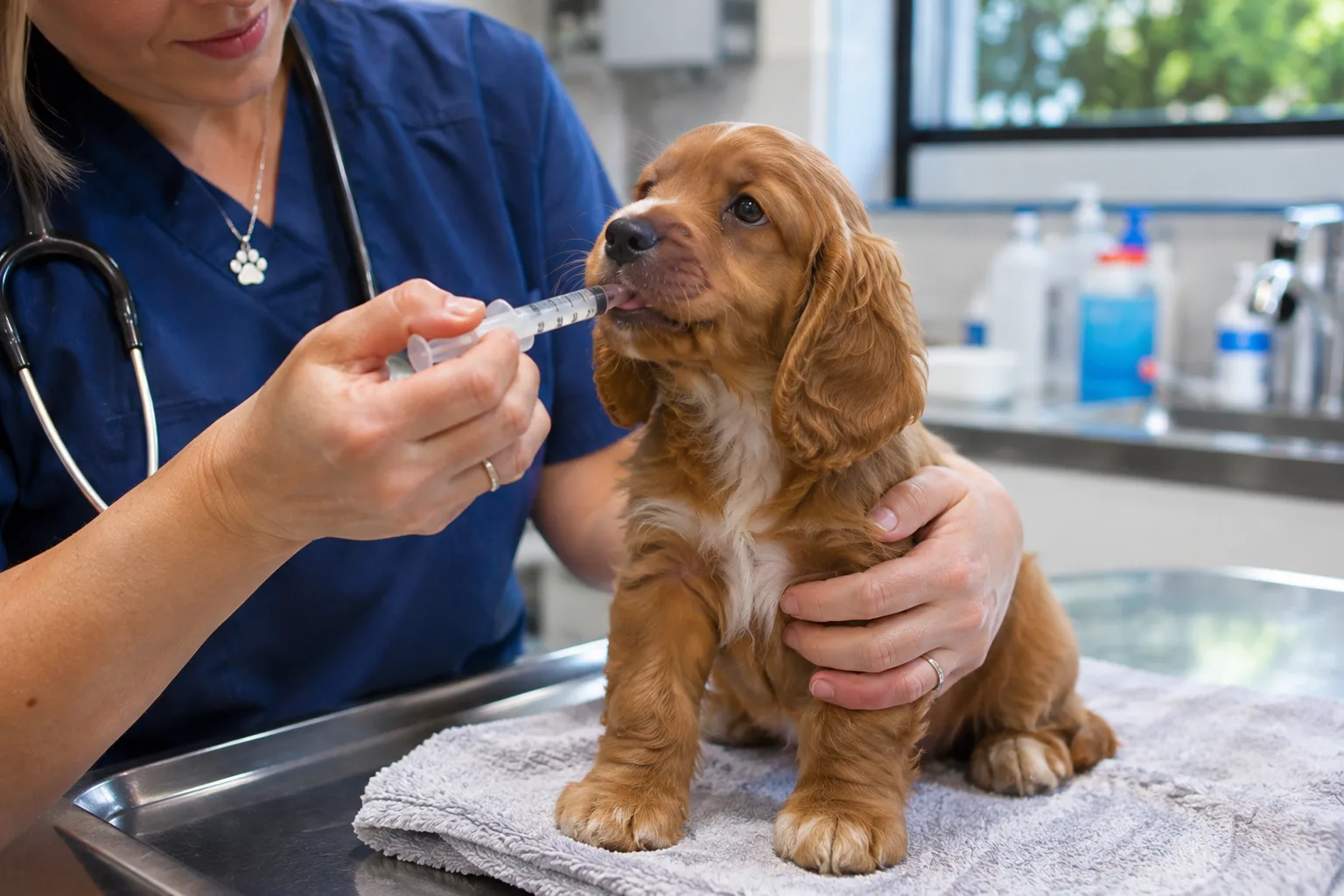
During a typical first visit, the veterinarian will ask about your puppy's history and observe their overall condition. The examination may include checking weight and body condition, listening to the heart and lungs, looking at the eyes and ears, examining the mouth and teeth, feeling the abdomen, and assessing the skin, coat, joints, and movement. Your veterinarian may recommend a stool test for intestinal parasites and discuss other tests based on the puppy's history or symptoms.
This is also a good opportunity to ask whether your puppy is growing as expected and to establish a healthy weight-tracking routine. The exact examination and testing plan will depend on your puppy.
Ask about vaccinations and preventive care
Puppies generally need a series of vaccinations because protection from their mother's antibodies decreases over time. Your veterinarian will review any vaccines already administered and recommend the remaining doses based on age, medical history, lifestyle, and local disease risks. Ask which vaccines are considered essential, whether additional vaccines make sense for your area, and when your puppy can safely visit parks, classes, or other places dogs gather.
Discuss heartworm prevention, flea and tick control, and intestinal parasite prevention as well. Products and doses must be appropriate for your puppy's age and weight; never assume a medication intended for an adult dog is safe for a young puppy.
Discuss food, growth, and everyday routines
Bring the name of the food your puppy has been eating and explain how much and how often you feed it. Your veterinarian can help you choose a complete, age-appropriate diet and discuss whether your puppy's breed or expected adult size calls for a particular growth formula. Ask how often to feed your puppy, how to judge healthy body condition, and how to make gradual food changes without upsetting the stomach.
You can also discuss exercise, sleep, safe chew toys, grooming, dental care, and housetraining. Puppies develop quickly, so advice tailored to their age and size is more useful than a one-size-fits-all schedule.
Plan safe socialization
Socialization means helping your puppy have calm, positive experiences with people, everyday sounds, surfaces, handling, and appropriate environments. It does not require exposing an incompletely vaccinated puppy to crowded dog parks or unfamiliar dogs. Ask your veterinarian about the disease risks in your community and how to balance infection prevention with early learning.
Depending on your puppy's health and local conditions, safe options may include meeting healthy, appropriately vaccinated dogs you know, being carried in public settings, and attending well-managed puppy classes that follow veterinary guidance. Watch your puppy's body language and avoid forcing interactions when they seem frightened or overwhelmed.
Know when to seek help
Young puppies can become ill or dehydrated quickly. Seek emergency veterinary care if your puppy has trouble breathing, collapses, has seizures, cannot stand, or shows extreme weakness. Contact a veterinarian promptly for repeated vomiting, diarrhea, blood in the stool, refusal to eat, marked lethargy, or other concerning changes, especially in a very young puppy.
Do not wait for the scheduled wellness visit if something seems wrong. When calling, explain your puppy's age, symptoms, when they started, and any possible exposure to toxins or sick animals. A veterinarian can advise whether immediate examination is necessary.
Questions to ask before you leave
Before the appointment ends, make sure you understand your puppy's next steps. Ask when the next vaccine or wellness visit is due, whether a stool sample or follow-up test is needed, what preventive medications to give and when, and which symptoms should prompt a call. Find out how to reach the clinic after hours and where the nearest emergency veterinary hospital is located.
Request a copy of the visit summary and keep it with the breeder's records. A clear plan will help you feel more confident and make it easier to provide consistent care as your puppy grows.
Book before pickup
Ask clinics about appointment availability and whether the breeder's contract requires an examination within a specific period. This matters because decisions about puppy health: preparing for the first vet visit are easier when families and breeders understand the practical details before problems arise. Ask what evidence supports the information you have been given, and distinguish a documented fact from a prediction or sales claim.
If the answer is unclear, request a specific example or written explanation rather than relying on an assumption. Think about how this point affects the individual puppy, the people caring for it, and the plans for the coming weeks. Keep notes on any dates, costs, responsibilities, or next steps that need to be confirmed.
Good preparation is not about finding a perfect situation; it is about identifying questions early, making informed choices, and putting the puppy's welfare ahead of convenience.
Bring complete records
Include dates of vaccinations, deworming, previous treatment, diet, birth date, and parent health information when available. This matters because decisions about puppy health: preparing for the first vet visit are easier when families and breeders understand the practical details before problems arise. Ask what evidence supports the information you have been given, and distinguish a documented fact from a prediction or sales claim.
If the answer is unclear, request a specific example or written explanation rather than relying on an assumption. Think about how this point affects the individual puppy, the people caring for it, and the plans for the coming weeks. Keep notes on any dates, costs, responsibilities, or next steps that need to be confirmed.
Good preparation is not about finding a perfect situation; it is about identifying questions early, making informed choices, and putting the puppy's welfare ahead of convenience.
Expect a nose-to-tail examination
The veterinarian may assess weight, hydration, eyes, ears, mouth, heart, lungs, skin, joints, and general development. This matters because decisions about puppy health: preparing for the first vet visit are easier when families and breeders understand the practical details before problems arise. Ask what evidence supports the information you have been given, and distinguish a documented fact from a prediction or sales claim.
If the answer is unclear, request a specific example or written explanation rather than relying on an assumption. Think about how this point affects the individual puppy, the people caring for it, and the plans for the coming weeks. Keep notes on any dates, costs, responsibilities, or next steps that need to be confirmed.
Good preparation is not about finding a perfect situation; it is about identifying questions early, making informed choices, and putting the puppy's welfare ahead of convenience.
Ask about preventive care
Discuss vaccine schedules, stool testing, parasites, nutrition, and safe exposure to other dogs. This matters because decisions about puppy health: preparing for the first vet visit are easier when families and breeders understand the practical details before problems arise. Ask what evidence supports the information you have been given, and distinguish a documented fact from a prediction or sales claim.
If the answer is unclear, request a specific example or written explanation rather than relying on an assumption. Think about how this point affects the individual puppy, the people caring for it, and the plans for the coming weeks. Keep notes on any dates, costs, responsibilities, or next steps that need to be confirmed.
Good preparation is not about finding a perfect situation; it is about identifying questions early, making informed choices, and putting the puppy's welfare ahead of convenience.
Know urgent warning signs
Weakness, repeated vomiting, breathing difficulty, collapse, or persistent refusal to eat can require prompt care. This matters because decisions about puppy health: preparing for the first vet visit are easier when families and breeders understand the practical details before problems arise. Ask what evidence supports the information you have been given, and distinguish a documented fact from a prediction or sales claim.
If the answer is unclear, request a specific example or written explanation rather than relying on an assumption. Think about how this point affects the individual puppy, the people caring for it, and the plans for the coming weeks. Keep notes on any dates, costs, responsibilities, or next steps that need to be confirmed.
Good preparation is not about finding a perfect situation; it is about identifying questions early, making informed choices, and putting the puppy's welfare ahead of convenience.
Discuss behavior and routines
Questions about sleep, chewing, housetraining, and socialization belong in a wellness visit too. This matters because decisions about puppy health: preparing for the first vet visit are easier when families and breeders understand the practical details before problems arise. Ask what evidence supports the information you have been given, and distinguish a documented fact from a prediction or sales claim.
If the answer is unclear, request a specific example or written explanation rather than relying on an assumption. Think about how this point affects the individual puppy, the people caring for it, and the plans for the coming weeks. Keep notes on any dates, costs, responsibilities, or next steps that need to be confirmed.
Good preparation is not about finding a perfect situation; it is about identifying questions early, making informed choices, and putting the puppy's welfare ahead of convenience.
Keep a medical timeline
Save records and future appointment dates in one place, including any changes in symptoms or medications. This matters because decisions about puppy health: preparing for the first vet visit are easier when families and breeders understand the practical details before problems arise. Ask what evidence supports the information you have been given, and distinguish a documented fact from a prediction or sales claim.
If the answer is unclear, request a specific example or written explanation rather than relying on an assumption. Think about how this point affects the individual puppy, the people caring for it, and the plans for the coming weeks. Keep notes on any dates, costs, responsibilities, or next steps that need to be confirmed.
Good preparation is not about finding a perfect situation; it is about identifying questions early, making informed choices, and putting the puppy's welfare ahead of convenience.
Trusted organizations to consult
Explore these independent educational resources. Linking to them does not mean this article has been reviewed or endorsed by their organizations.
- Puppy life-stage care overview ↗American Animal Hospital Association
- Canine life-stage checklists ↗American Animal Hospital Association
Puppy care essentials
A few practical supplies can make your puppy's first weeks at home more organized.
As an Amazon Associate, Reserve a Pup earns from qualifying purchases. These links open Amazon searches; prices, availability and products are determined by Amazon.