
Key takeaways
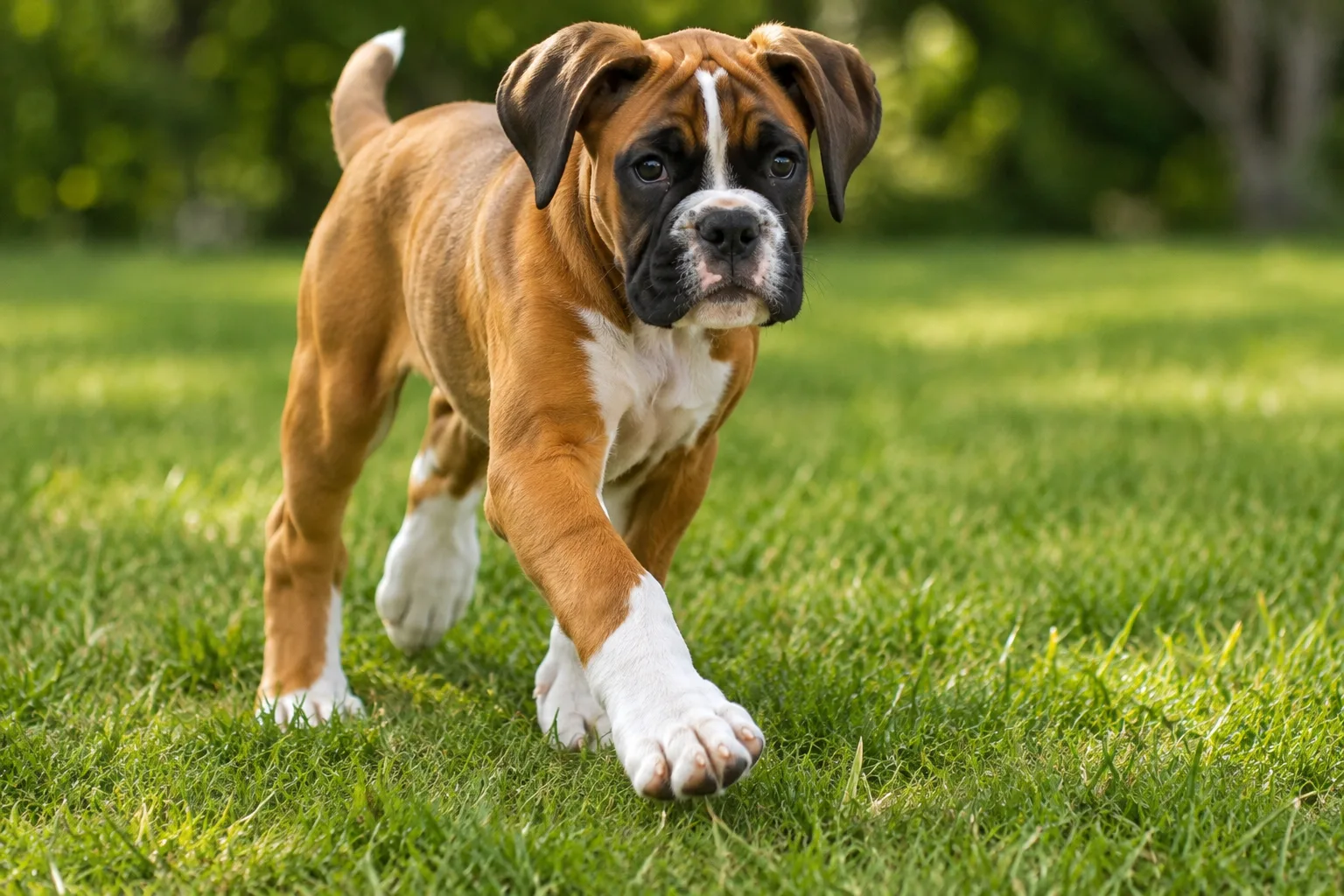
- Large and giant-breed puppies grow rapidly and may remain skeletally immature for an extended period.
- Popular formulas assigning a fixed number of walking minutes per month of age are not reliable medical prescriptions for every puppy.
- Gentle play, sniffing walks, and exploration on suitable surfaces allow the puppy to vary speed and rest.
Health information: This guide is educational and is not a diagnosis or a substitute for individual veterinary advice. Contact your veterinarian about concerns with your puppy or dog.
Why large-breed growth deserves attention
Large and giant-breed puppies grow rapidly and may remain skeletally immature for an extended period. They need regular activity for coordination and confidence, but excessive forced exercise can be inappropriate.
There is no universal minute rule
Popular formulas assigning a fixed number of walking minutes per month of age are not reliable medical prescriptions for every puppy. Activity should be adjusted for breed, individual development, conditioning, temperature, and signs of fatigue.
Favor self-paced movement
Gentle play, sniffing walks, and exploration on suitable surfaces allow the puppy to vary speed and rest. Supervise interactions with larger dogs so play does not become rough or overwhelming.
Avoid forced endurance training
Long runs beside a bicycle, repetitive road jogging, and exhausting hikes are poor starting activities for a young large-breed puppy. Discuss the timing of structured athletic training with your veterinarian.
Think about jumping and stairs
Ordinary movement is part of life, but repeated high-impact jumps and uncontrolled falls may create avoidable risks. Use gates, ramps, and supervision where appropriate rather than forcing awkward movement.
Nutrition supports exercise
A complete diet appropriate for large-breed growth and a lean body condition help reduce unnecessary joint stress. More food does not necessarily create healthier or stronger growth.
Recognize fatigue and pain
Lagging behind, repeated sitting, stiffness, limping, or refusal to continue are reasons to stop and assess. Persistent symptoms warrant veterinary evaluation rather than pushing through a training goal.
Increase activity gradually
As the puppy matures, build endurance and skills slowly. Ask your veterinarian about sport-specific conditioning and when higher-impact activities may be suitable.
Plan a balanced day
Combine short sniffing walks, gentle play, simple training, meals, and ample rest. Puppies often benefit more from variety than from long repetitive exercise. Allow opportunities to explore at their own pace.
Read the puppy's behavior
A puppy that slows down, repeatedly sits, becomes clumsy, or seems sore afterward may have done too much. Stop, offer rest, and reconsider the intensity. Persistent lameness needs veterinary assessment.
Consider terrain and weather
Heat, ice, steep hills, hard pavement, and slippery surfaces can change how demanding an outing feels. Carry water when appropriate, choose safe footing, and avoid extreme conditions.
Ask before starting sports
Running beside bicycles, repeated agility jumps, and other high-impact activities require maturity and conditioning. Consult your veterinarian about the individual dog's development before beginning structured athletic training.
Examples of an age-appropriate activity day
A balanced day might include several short sniffing walks, play with suitable toys, relaxed exploration on a safe surface, brief positive-reinforcement training, meals and generous rest. The length of an outing should depend on how the puppy responds, not a rigid distance target. Offer chances to stop, drink and settle, especially in warm weather.
Avoid asking a growing puppy to run next to a bicycle, accompany an adult dog on a long endurance hike or repeatedly jump for a ball until exhausted. These activities can wait until the dog is physically mature and has been appropriately conditioned.
What owners should watch during and after play
Fatigue can look like lagging behind, slowing down, sitting frequently, refusing an obstacle, becoming unusually clumsy or losing enthusiasm. Check the puppy afterward for limping, stiffness after rest, sore paws or reluctance to move the next morning. Mild tiredness after an active day is not the same as persistent lameness or pain.
Reduce activity if the puppy is struggling and contact your veterinarian about recurrent symptoms. Traction, terrain and playmate size matter: a smooth floor and rough play with a much larger dog may cause avoidable slips even if the session is short.
Preparing a growing dog for future sports
For puppies expected to take part in running, agility, hiking or competitive sports, focus first on calm handling, balance, confidence and basic cues. Gradually introduce new environments and low-impact skills without repetitive high jumps or strenuous conditioning. The right time for advanced activity depends on breed, size, individual development and the particular sport.
Some large and giant breeds mature later than smaller dogs. Ask your veterinarian about orthopedic concerns and appropriate exercise progression before starting demanding training. Good conditioning is built gradually, not by testing a puppy's maximum endurance.
Trusted organizations to consult
Explore these independent educational resources. Linking to them does not mean this article has been reviewed or endorsed by their organizations.
- Hip dysplasia and joint care ↗Orthopedic Foundation for Animals
- Nutrition for growing large-breed dogs ↗American Animal Hospital Association
Helpful supplies for joint comfort
Practical home aids can make movement easier. These are product categories to discuss with your veterinarian, not treatments for hip dysplasia.
Joint supplements do not correct abnormal hip structure. Check ingredients, dose and medication interactions with your veterinarian before buying.
As an Amazon Associate, Reserve a Pup earns from qualifying purchases. These links open Amazon searches; prices, availability and products are determined by Amazon.